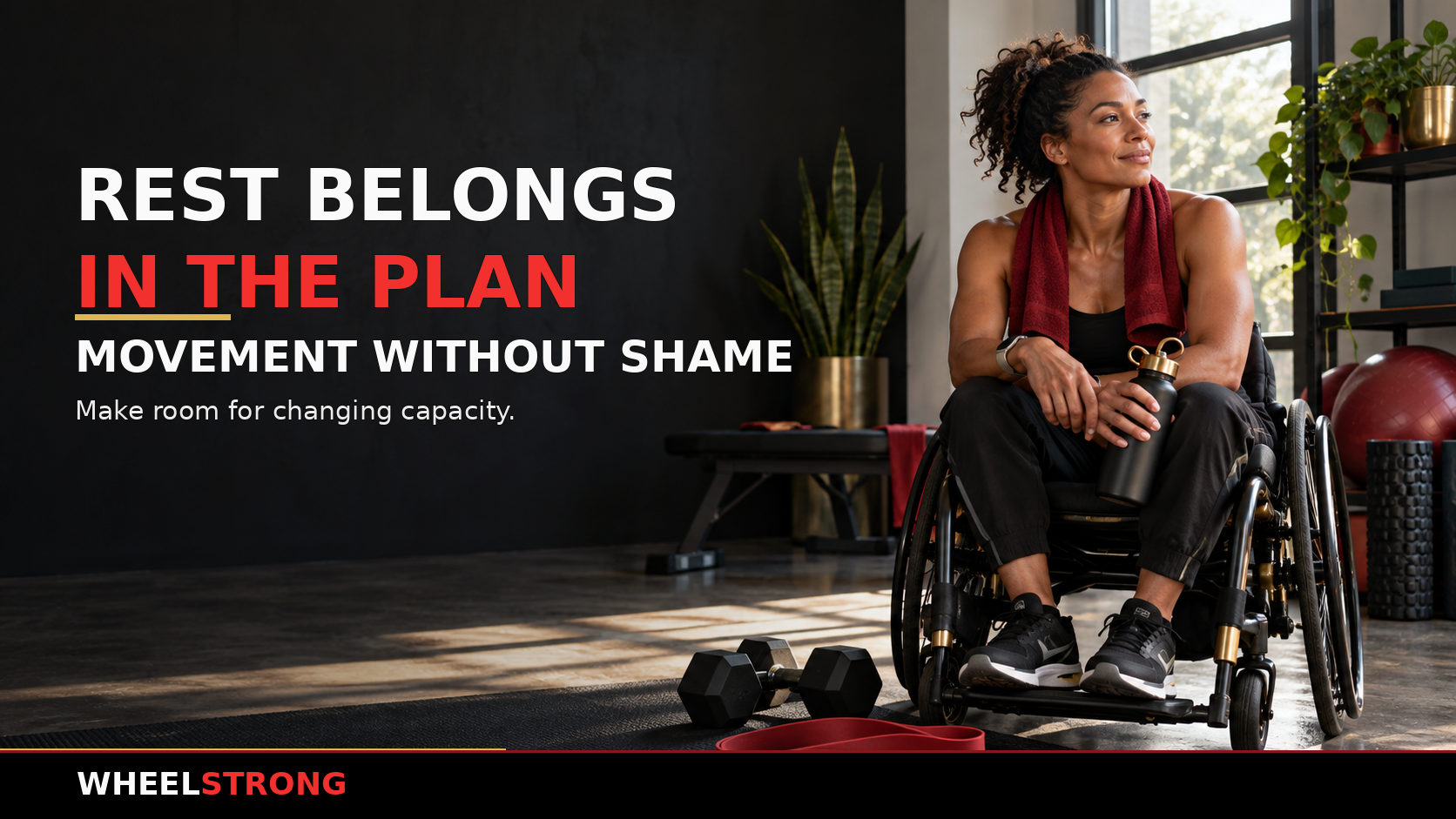
A movement plan can look tidy on paper and still be a poor fit for real life. Energy, pain, sleep, care routines, transportation, and the day’s demands can all affect what feels manageable. When the plan has only one acceptable version, a change in capacity can start to feel like failure.
Rest is not proof that you are lazy or uncommitted. It can be part of how you make a routine more realistic and sustainable. What works for one person may not work for another, especially across different disabilities and health needs.
MAKE MORE THAN ONE VERSION OF THE PLAN
Instead of treating every session as all or nothing, decide in advance what a shorter or lighter option could look like for you. That might mean less time, fewer movements, a different position, or simply postponing the session. Choose options that are appropriate for your body and any guidance you have received from your care team.
Having choices can make it easier to stay connected to a goal without forcing the same effort every day. It also gives you useful information about what supports your routine.
MEASURE THE PLAN BY WHETHER IT SERVES YOU
A movement habit is not a character test. Consider whether it helps you feel stronger, more confident, or more engaged in daily life. If the plan repeatedly leaves you overwhelmed, unsafe, or unable to recover in the way you need, it may be time to adjust it with qualified support.
A log can stay simple: what you tried, what felt manageable, and what you want to change next time. No grades. No punishment for taking a rest day.
REST CAN PROTECT YOUR RELATIONSHIP WITH MOVEMENT
When every missed session becomes a reason to quit, the routine is too brittle. A plan with room for rest and adaptation is more likely to meet you where you actually are.
Movement should be shaped around your body, goals, and medical needs. If you have questions about what is safe for you, work with a clinician or qualified adaptive fitness professional who understands your situation. You deserve support that makes movement more possible, not more shameful.
Leave a Reply