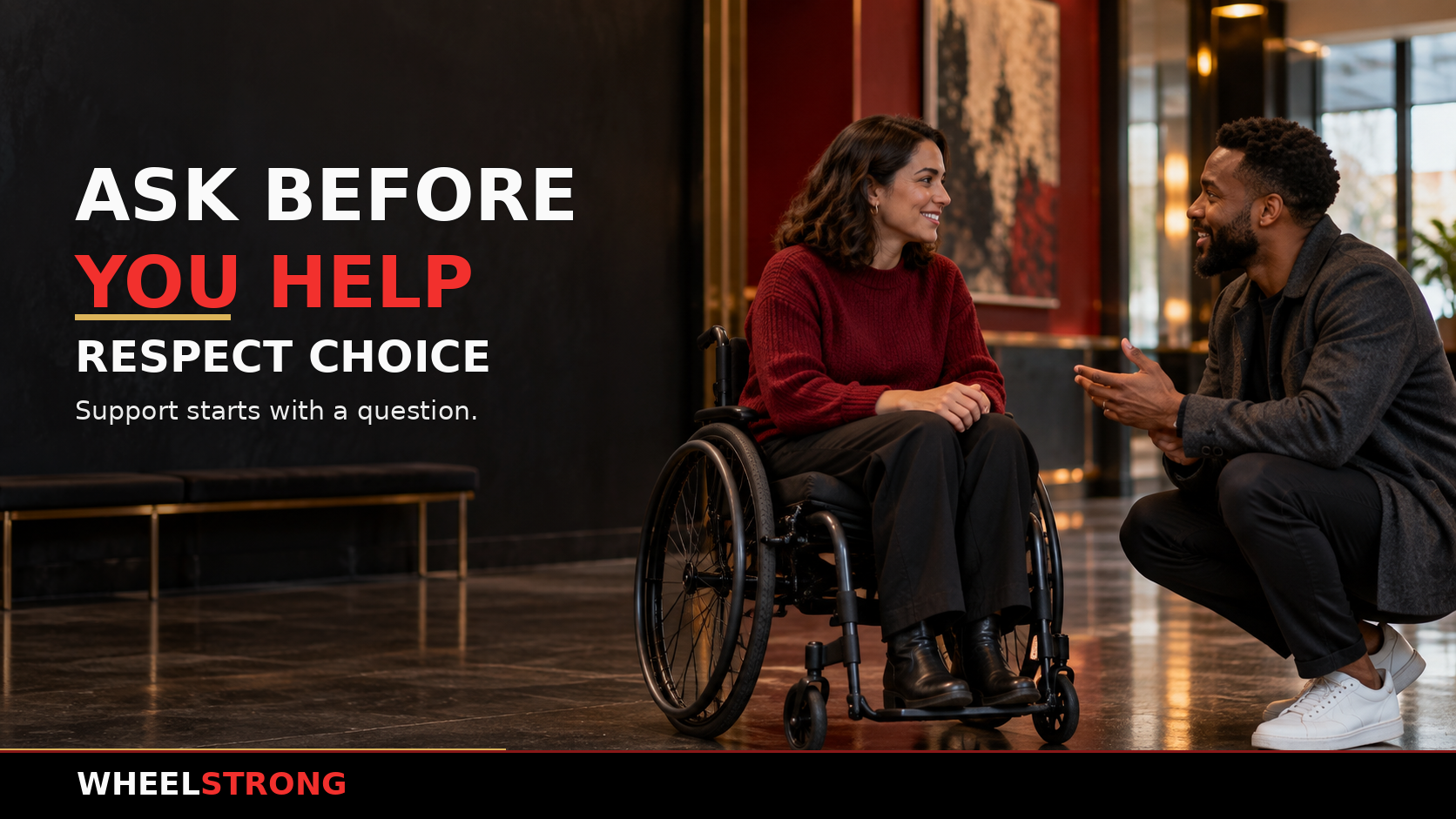
Most people want to be helpful. The awkward part is when help arrives as a hand on someone’s wheelchair, a grabbed mobility aid, or a decision made without asking. Good intentions do not tell you what another person needs.
A simple question leaves the choice with the person. Try “Would you like a hand?” or “Is there a way I can help?” Then pause long enough for an answer.
ASK THE PERSON, THEN LISTEN
Speak to the disabled person directly, even when someone else is nearby or assisting them. Do not assume a companion should answer. The person may want help, may want a different kind of help, or may prefer to handle the situation independently.
If they say no, accept it without turning the moment into an argument. If they say yes, ask what would be useful. “Let me know if you need anything” is kind, but a clear offer can be easier to answer.
KEEP HANDS OFF THE CHAIR AND EQUIPMENT
A wheelchair, walker, cane, communication device, or service animal is part of the person’s space and routine. Do not lean on it, move it, steer it, or touch attached equipment without permission. If a chair is blocking a path, ask the person before moving it.
Never push someone’s wheelchair as a surprise. If they ask for assistance, let them explain how they want it done. Different chairs, bodies, and situations call for different approaches.
OFFER ACCESS WITHOUT TAKING OVER
You can make a choice available without making it for someone. Ask whether they want the ramp route, a quieter spot, a menu read aloud, or extra time. Avoid talking over them, praising ordinary tasks as heroic, or treating a disability as an invitation to ask private questions.
RESPECT LOOKS LIKE ROOM TO CHOOSE
There is no universal script because disabled people are not a single group with identical preferences. The reliable starting point is simple: ask, listen, respect the answer, and keep the person in charge of their own body and decisions.
Leave a Reply